Cute Dreams: A Playful Font for Creative Projects
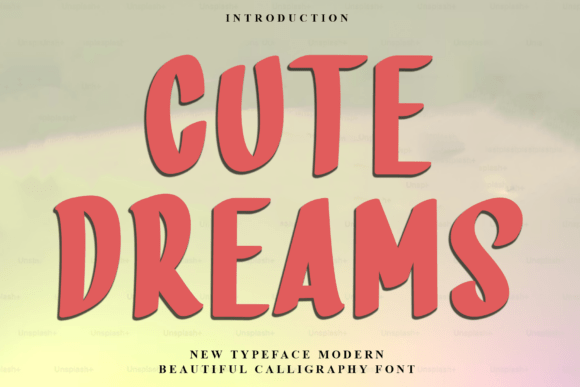
Typography sets the emotional tone of any design before a single word is read. When a project requires warmth, approachability, and a distinct human touch, standard geometric sans-serifs or formal serifs often fall short. Cute Dreams fills this specific niche as a casual, creative typeface that exudes friendliness through its round, playful strokes. Unlike rigid digital fonts, it carries a hand-drawn aesthetic that feels relaxed and organic. This charm makes it an ideal candidate for designs where connection matters more than corporate precision.
While the visual style is undeniably whimsical, the technical foundation of Cute Dreams ensures it remains a practical tool for modern workflows. It comes equipped with standard PUA (Private Use Area) encoded glyphs, allowing seamless access to special characters and alternates across various application engines. Whether you are working in Adobe Photoshop, CorelDRAW, Adobe Illustrator, or browser-based platforms like Canva, the font integrates smoothly without requiring complex workarounds. This balance of artistic flair and technical reliability is what separates a novelty font from a versatile design asset.
Evaluating Typeface Value Across Skill Levels
Different creators prioritize different aspects of typography based on their experience and current needs. For beginners and hobbyists, the primary concern is often ease of use and immediate visual impact. Cute Dreams serves as an excellent entry point because its personality does much of the heavy lifting. A simple invitation or social media post created by a novice can look professionally styled simply by choosing a typeface that inherently conveys the right mood. The learning value here lies in understanding how font selection influences perception without needing advanced typographic pairing skills immediately.
Experienced designers and professionals, however, evaluate fonts through a lens of flexibility and reliability. You might appreciate Cute Dreams not just for its surface-level cuteness, but for the PUA encoding that allows for customization. Professionals know that overused script fonts can look generic; having access to alternate glyphs enables you to tweak letterforms to fit specific layouts or avoid awkward spacing issues. For a freelancer managing multiple client brands, this adaptability means one font purchase can serve diverse projects ranging from boutique bakery packaging to children’s event branding, maximizing commercial value and long-term usefulness.
Practical Applications for Business and Marketing
Small business owners and marketers face the challenge of standing out in saturated digital spaces while maintaining brand trust. In these contexts, Cute Dreams offers a strategic advantage for specific touchpoints. It is rarely appropriate for legal disclaimers or financial reports, but it excels in areas requiring emotional engagement.
- Social Media Graphics: Thumb-stopping content often relies on texture and feeling. Using this font for Instagram stories or Pinterest pins signals authenticity and breaks the pattern of polished, sterile advertising.
- Product Packaging: For artisanal goods, handmade crafts, or eco-friendly products, the hand-drawn strokes reinforce the narrative of human craftsmanship and care.
- Email Marketing Headers: Subject lines and preview text compete for attention, but the body of a newsletter needs warmth. Using Cute Dreams for section headers can make promotional emails feel more like personal correspondence.
- Event Signage: From baby showers to community festivals, physical signage benefits from legible yet decorative type that welcomes attendees rather than instructing them.
For entrepreneurs, the decision to use Cute Dreams should align with brand voice. If your business thrives on professionalism and authority, this may only be suitable for seasonal campaigns or internal culture initiatives. However, if your value proposition centers on creativity, care, education, or lifestyle, this typeface supports your core messaging consistently.
Considerations for Educators and Content Creators
Educators and content creators operate in a unique space where clarity must coexist with engagement. For teachers creating classroom materials, worksheets, or certificates, readability is paramount. Cute Dreams maintains legibility despite its decorative nature, making it safer for educational use than highly distressed or complex scripts. The rounded forms are particularly effective for early childhood education resources, where softer shapes are perceived as less intimidating and more encouraging for young learners.
Content creators, such as bloggers and YouTubers, often need to establish a recognizable visual identity quickly. Consistency builds audience recognition. By incorporating Cute Dreams into thumbnails, channel art, or blog post titles, creators can signal their niche instantly. The priority here is speed and presentation; the font’s inherent character reduces the time spent adding manual textures or effects to achieve a cozy aesthetic. Furthermore, compatibility with tools like Canva is crucial for creators who may not have access to full Adobe suites, ensuring that high-quality design remains accessible regardless of software budget.
Technical Compatibility and Workflow Integration
A beautiful font is useless if it disrupts your workflow. Understanding the technical specifications of Cute Dreams helps prevent frustration during production. The inclusion of PUA encoded glyphs is a significant feature for users across different platforms.
- Adobe Users: In Illustrator and Photoshop, access these glyphs via the Glyphs panel. This allows you to drag and drop alternates directly onto your canvas, essential for custom logotypes or intricate lettering compositions.
- CorelDRAW Users: Utilize the Character Map or Text Properties docker to locate and insert special characters, ensuring your vector designs retain their intended charm.
- Canva and Web Tools: Many web-based design tools now support PUA unicode. If specific glyphs do not appear in the standard dropdown, copying them from a character map utility and pasting them into the text box often unlocks the full potential of the font family.
This cross-platform reliability ensures that whether you are a professional designer delivering print-ready files or a DIY bride designing wedding stationery at home, the final output matches your vision. Reliability in file rendering prevents last-minute substitutions that could compromise the design's integrity.
Determining If Cute Dreams Fits Your Project
Selecting the right typeface is ultimately about matching form to function. Before downloading or purchasing, assess your specific goals against the attributes of Cute Dreams. Ask yourself if the project demands a sense of nostalgia, playfulness, or intimacy. If the answer is yes, this font is likely a strong contender. Conversely, if the goal is to convey stability, luxury, or urgent information, you may want to reserve this typeface for accent elements rather than primary headings.
Consider also the volume of text. Hand-drawn styles generally perform best in display sizes—headlines, quotes, logos, and short captions. Extended paragraphs set in Cute Dreams may reduce reading speed and cause eye fatigue compared to optimized body copy fonts. Successful implementation often involves pairing it with a clean, neutral sans-serif for supporting text, allowing the personality of Cute Dreams to shine without overwhelming the viewer.
Ultimately, the value of Cute Dreams lies in its ability to humanize digital and print media. For the consumer looking for a unique invitation font, it offers memorability. For the marketer, it offers differentiation. For the educator, it offers approachability. By understanding both its aesthetic qualities and its technical capabilities, you can leverage this typeface to create designs that feel genuinely crafted rather than mechanically produced. Whether you are enhancing a personal scrapbook or refining a commercial brand identity, the warmth embedded in these strokes provides a foundational layer of connection that resonates with audiences seeking authenticity in an increasingly automated world.